Cricket Wellington News

Many rewards in umpiring says Watkin

Wednesday, 6 October 2010

Umpire Evan Watkin says seeing the world’s greatest players up close and personal is just one of many rewards of becoming an umpire. In July Watkin was made a Life Member of the Cricket Wellington Umpires and Scorers Association (CWUSI) and Cricket Wellington recently caught up with him to ask about of his umpiring career highlights and how aspiring umpires can get involved.

CWUSI ChairmanWatkin has umpired three Test matches, 23 One Day Internationals and six Twenty20 internationals and has spent over 300 days out in the middle of the Basin Reserve. He made his first-class umpiring debut in 1989 and his first five-day international was the inaugural Boxing Day Test in 1998, which New Zealand won thanks to a withering opening morning bowling spell by Simon Doull (7 for 65) and a fighting 74 not out in the second innings by Craig McMilian. He umpired the Basin Reserve Test a year later between New Zealand and the West Indies, and after starting out as the third umpire, stood for an ill Billy Doctrove for the last three days in Napier last year when the BLACKCAPS played India.

Evan Watkin umpiring the second Test between in Napier in March 2009 between the BLACKCAPS and India

Cricket Wellington recently caught up with Watkin as another summer of cricket in Wellington draws nearer:

Cricket Wellington: Before you donned the white jacket you had a long playing career in Wellington. Who did you play for?

Evan Watkin: I initially played for Tauranga Boys College and the Tauranga Club in the Tauranga competition before moving to Wellington in 1971. In Wellington, I played two seasons for Kilbirnie (now Eastern Surburbs), one season for Naenae Old Boys, seven seasons for Upper Hutt and one season for Tawa at either Senior or Senior Reserve level. I took up umpiring in the 1982/83 season.

CW: How and why did you first get into umpiring?

EW: I was going to give umpiring a go when I moved from Upper Hutt to Whitby in 1981 but didn't get around to it so I played one more season. I was also scoring some games and spoke to one of the umpires, Stan Cowman, who encouraged me to come to an umpires meeting. So the following winter I joined the Wellington Umpires Association. I thought I would give it two seasons and if I didn't enjoy it I would go back to playing. However, I knew straight away that my playing days were over because I enjoyed it so much.

CW: When did you umpire your first first-class game and who was the first batsman you sent back to the pavilion?

EW: My first first-class game was Wellington v Northern Districts at the Basin Reserve from 8 to 10 December 1989. I vividly remember the first ball bowled at my end in first-class cricket - a "big no ball" bowled by Stephen Hotter to David White from the northern end of the Basin Reserve on 8 December, which incidentally was the same day that Chris Harris made his First Class debut in Christchurch. The first batsman I gave out was Grant Bradburn, caught behind by Erv McSweeney off the bowling of Evan Gray, now of course an umpiring colleague of mine.

CW: What have been some of the major highlights from your time in the middle – any moments or characters that have stood out?

EW: Obvious highlights were all the "Firsts". My first-class debut mentioned above, first One Day International (India v South Africa in Hamilton in 1995), first Test Match, which was the first Boxing Day test between New Zealand and India at the Basin in 1998, my first and only overseas trip to umpire as the exchange umpire to South Africa in 2001 where I umpired two first-class games, at Centurion and Cape Town. I have been honoured to stand out on the field watching many of the greatest players the world has seen such as Brian Lara, Sachin Tendulkar, Shane Warne, Muttiah Muralitharan, Wasim Akram, Andrew Flintoff, Allan Donald and young Sir Richard Hadlee. I say "young" because he was born the day after me!!!! Another highlight was umpiring the first match at Westpac Stadium, a domestic One-Day match between Wellington and Northern Districts on 4 January 2000. I also umpired the first Men’s ODI at the Stadium (New Zealand v West Indies, which started on 8 January and was completed on 9 January) and the first Women’s ODI at the Stadium (New Zealand v England on 15 February) In fact I umpired every match played at the Stadium in its first year of use in 2000.

CW: You’ve umpired 3 Tests, 23 ODIS and six Twenty20 internationals and been Third Umpire in many more. Is there one highlight or moment out in the middle from all of these that sticks out for you?

EW: If I was to pick out one individual moment it would be Sachin Tendulkar doing a little shimmy outside leg stump to loft Daniel Vettori into the sightscreen for 6 to bring up his hundred in the second innings of that first Boxing Day Test in 1998.

CW: Any hairy moments at the crease?

EW: One I do recall is during a New Zealand v Sri Lanka ODI at the Basin when a New Zealand bowler named Gavin Larsen threw the ball at Aravinda de Silva just because Aravinda was slightly out of his crease after playing the ball. Aravinda tried to protect himself by putting his bat down to try to stop the ball from crashing on to his foot, but then set off for a run after the ball deflected away. New Zealand then appealed against Aravinda for Obstructing the Field. I gave him Not Out.

CW: The cricketers’ life in New Zealand is one of varied destinations and picturesque grounds (not to mention the epicurean lunches on offer). Do you have a favourite ground?

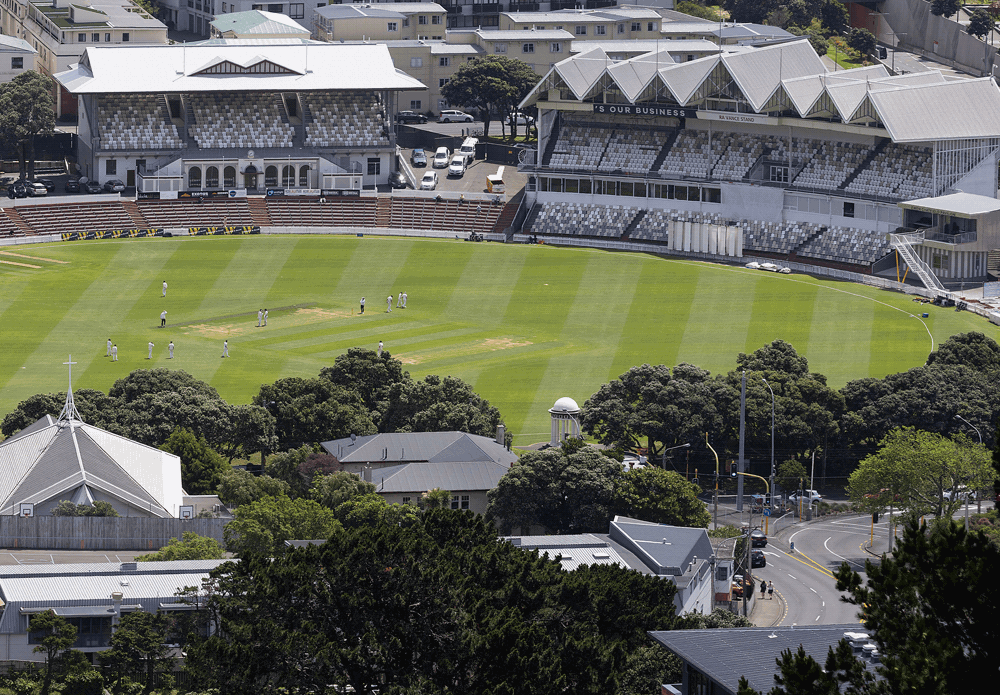
EW: The Basin Reserve is my favourite and I have spent over 300 days out in the middle there. Also high on the list would be Seddon Park in Hamilton, the Queenstown Events Centre, Pukekura Park in New Plymouth and Bert Sutcliffe Oval at Lincoln.

CW: How do you see the use of technology as being a good thing for the game?

EW: Obviously technology is here to stay, and along with most umpires I have accepted that it is now being used to help prevent major umpiring errors so it’s a good thing for the game.

CW: What about the impact of Twenty20 cricket –exciting times in which to get involved as an umpire?

EW: I do worry that it may be another version of cricket that people quickly get sick of because there are too many meaningless games played. I think there are already signs of that but clearly the cricketing administrators all around the world want to make the most of the opportunities while they can. From an umpiring viewpoint, it’s the best seat in the house! From an entertainment perspective there’s nothing better. But a flipside is that it is often not very challenging because it is such a short game and sometimes very little happens that requires the umpire to make decisions on.  

CW: How is the New Zealand umpiring panel structured?

EW: There are 10 umpires on each of New Zealand’s three panels, the Elite Panel, the A Panel and the Reserve Panel, making 30 in all under the umbrella of New Zealand Cricket. Two of New Zealand’s Elite Panel (Billy Bowden and Tony Hill) are currently on the ICC Elite Panel and two others are on the International Panel with one reserve.

CW: How can budding umpires get involved in Wellington?

EW: If you want to become an umpire, simply join our organisation and come along to umpiring meetings. It is preferable if you are able to attend a winter training programme which gives you a full grounding on the Laws before starting out on your umpiring career. However, if you have had reasonable playing experience, you can be trained on the essential laws in a shorter time-span. All umpires are judged by the captains who submit reports on the umpires after each match. Those reports form the basis for ranking umpires at the end of each season and 10 names are forwarded to New Zealand Cricket to be considered for the National panels mentioned above.

Contact the Regional Training Officer, Grant McAlister, on 4755388 or check out our website http://www.wellingtonumpires.com/, which has all you need to know about becoming an umpire.

CW: Any other advice for new umpires?

EW: There is no pressure put on any umpire to umpire more than they can but obviously if they want to progress it is a good idea to umpire as much as possible. It is a great place to watch cricket from and an ideal way to remain involved in the game once your playing days are over. Alternatively if you don't want to umpire, you could always consider becoming a scorer which is another vital part of every game of cricket.


Cricket Wellington  Umpires and Scorers Inc. Life Members:

DW (David) Abbott

J (John) Cook

DEA Copps (Dennis)

WT (Trevor) Martin

MJ (Micahel) Stride

EA (Evan) Watkin

SJ (Steve) Woodward